Optiva Solutions
A multi-tenant SaaS that automates the back office of small Australian businesses: quotes, invoicing, appointments, follow-ups. AI agents do the work; the client only ever sees a dashboard.
- AI agent
- In progress
- 2026
- 6 mois
- FastAPI
- Next.js
- PostgreSQL
- Redis
- n8n
- API Anthropic
- Docker
- pgvector
- TypeScript
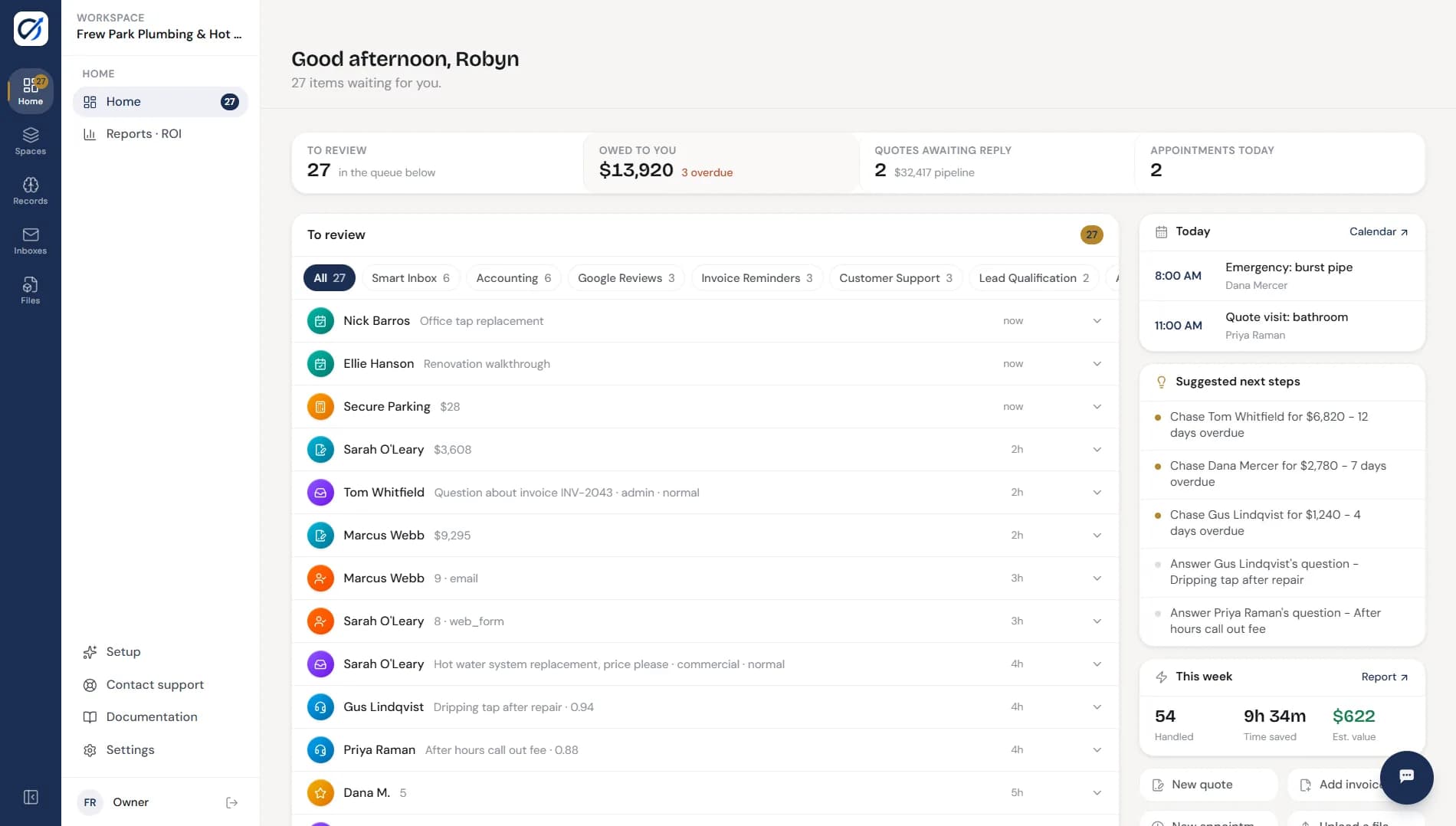
A small business spends its days chasing invoices, answering emails, booking appointments and filing documents. Optiva does that work for them and leaves them a dashboard: the client never touches the machinery.
The architecture
A Next.js dashboard talks to a FastAPI backend, which pushes jobs onto a Redis queue consumed by a self-hosted n8n running in queue mode. The agents use Anthropic's API to extract, classify and draft. Anything involving money, Australian GST or payroll stays deterministic: a mistake there is settled with the tax office, not with a bad answer.
Tenant isolation
One database for every business, with a tenant column and PostgreSQL row level security on every table. The application role is not allowed to bypass those rules: one client's query cannot read another's rows, even when the code gets it wrong.
Credentials for connected accounts — Gmail, Outlook, Xero, MYOB, QuickBooks — are encrypted at rest. Two-factor authentication, rotating refresh tokens, per-company API keys, an audit trail: this is where my cybersecurity training earns its keep every day.
Scale
About a hundred migrations, some fifty API modules, 547 tests, a Docker Compose deployment behind Nginx on a server in Sydney. By far the largest project I have run, and the one that taught me the most about what breaks when several businesses share one database.
Gallery
Accounting Inbox